Skip to content
Construction AI Tools

The best electrical estimating software

Electrical estimating software for contractors who bid commercial and industrial work, compared on labor units, price feeds, auto count and where it runs.

UpdatedNov 21, 2026
Prices readNov 21, 2026
Tools compared5
Published prices1 of 5

Which one should you buy?

For most commercial and industrial electrical shops, Trimble Accubid Anywhere is the one to shortlist first: Trade Service material and labor pricing comes with the subscription, and its AI counts symbols and measures conduit runs. Pick McCormick if your estimators price labor from NECA units, and Conest if you need an on-premises install or also bid low voltage, datacom and solar. Countfire is the only one you can try free before a sales call, and Beam AI from Attentive.ai is for shops that want takeoffs done for them, with plans starting at $25K a year.

The picks

01

Accubid Anywhere

Commercial shops that want pricing and AI counts in one subscription

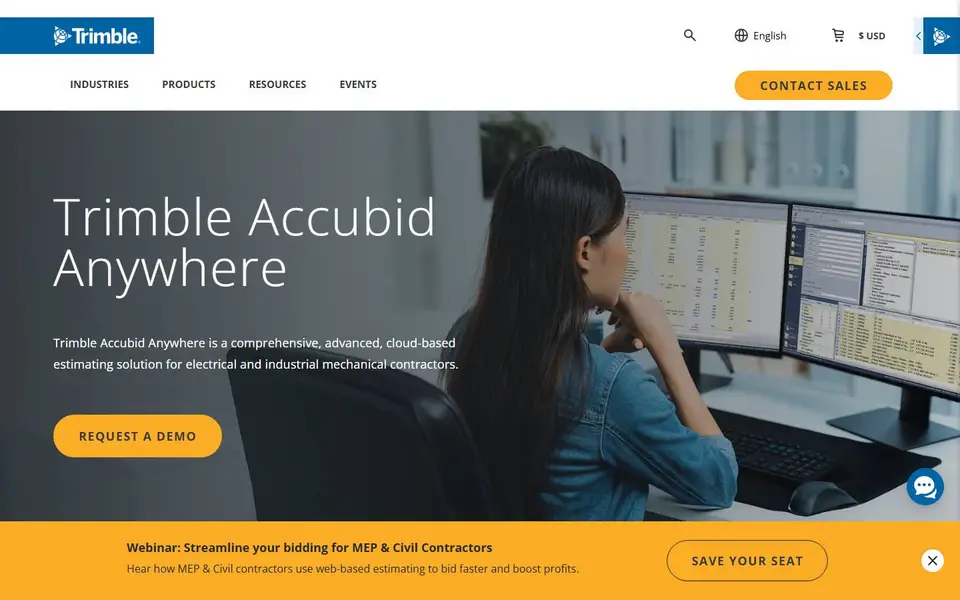
Accubid Anywhere is Trimble's cloud estimating product for electrical and industrial mechanical contractors. Material, labor and vendor pricing from Trade Service is included in the subscription, so there's no separate price feed to buy and keep in sync. LiveCount AI and Auto Count handle symbol counts, and Trimble's June 2026 release added auto-routing for conduit length, automatic scale and sheet naming across plan sets, and an AI Smart Assistant inside the product.

Trimble shows no price and no trial, only a sales call and a demo. It runs in the browser and needs an internet connection. Trimble also says estimators are expected to check the AI counts for false positives with their own QA step, so the review time doesn't go away. This guide covers Anywhere; Trimble's older Accubid Classic isn't part of it.

Good
  • Trade Service material and labor pricing included
  • AI counts symbols and measures conduit runs
  • Covers industrial mechanical work as well as electrical
Watch for
  • No published price or free trial
  • Cloud only, so it needs an internet connection
Accubid Anywhere website
02

McCormick

Estimators who price labor from NECA units

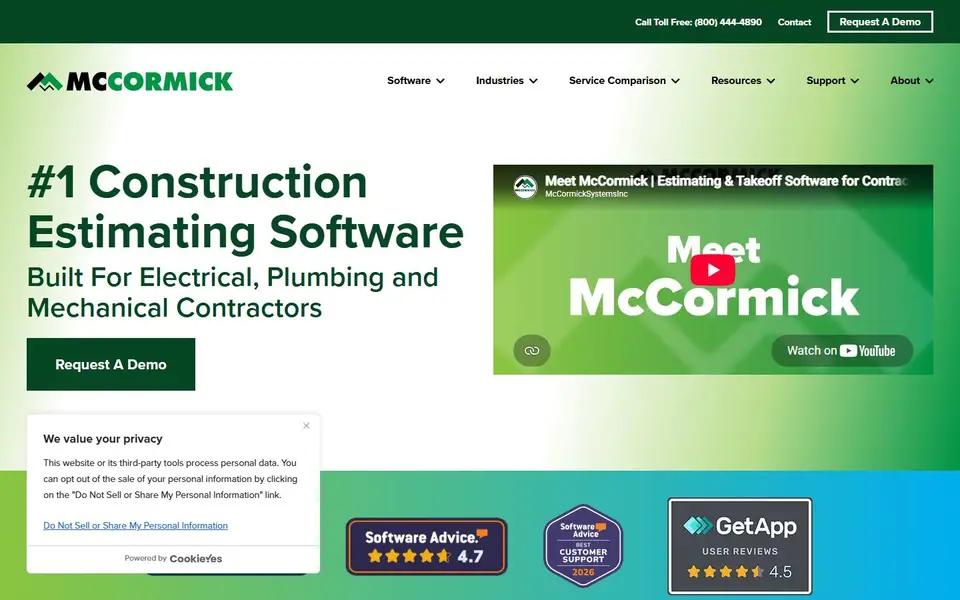
McCormick is an estimating and takeoff platform for electrical, plumbing and mechanical contractors, built and supported by the same team as Foundation Software. For electrical bids it ships McCormick's own labor units plus three levels of NECA labor units, and McCormick says its electrical database holds more than 55,000 items and 25,000 prebuilt assemblies. Takeoff runs from PDF plans inside the product with no third-party viewer, using auto-count and the patented Auto Home Run feature. You reach it in the cloud from anywhere with internet.

McCormick has no AI shipping today. Its AI statement lists AI-assisted symbol detection for common electrical symbols such as outlets, fixtures and switches as phase one of a roadmap, and gives no date for it, so judge it on the takeoff it has now. Pricing is by demo request, and no trial is listed.

Good
  • NECA labor units at three levels, plus MCAA or PHCC
  • Built-in PDF takeoff with auto-count and Auto Home Run
  • Same team as Foundation construction accounting
Watch for
  • AI symbol detection is a roadmap item with no date
  • No published price or trial
McCormick website
03

Conest

Shops that need an on-premises install or bid low voltage and solar

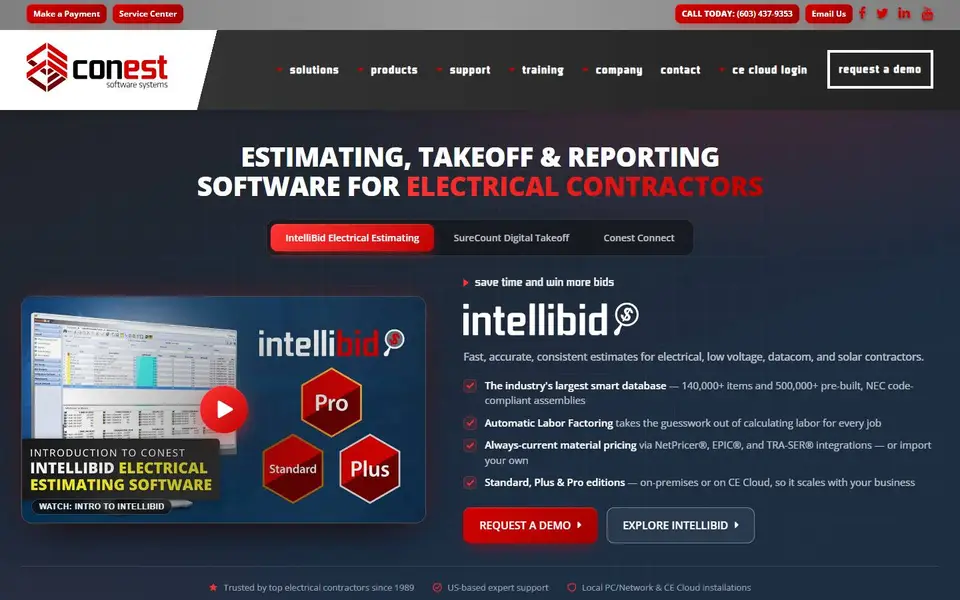
Conest builds estimating software for electrical, low voltage, datacom and solar contractors, and it's the only pick here whose page offers an on-premises install alongside its hosted CE Cloud. It comes in Standard, Plus and Pro editions, though the home page doesn't say what separates them. Material prices come in through NetPricer, EPIC and TRA-SER integrations, or from a file you import, and labor is factored automatically on each job. Conest calls its database of items and NEC code-compliant assemblies the largest in the industry.

On drawings, its patented Auto Count counts all symbol types on a drawing at once, and overlay comparison highlights additions and deletions on revised drawings, which helps when addenda come in. Conest doesn't describe any of this as AI. All three editions are quote-only, with a demo and no trial.

Good
  • Runs on-premises or on CE Cloud
  • NetPricer, EPIC and TRA-SER pricing integrations
  • Covers low voltage, datacom and solar estimating
Watch for
  • Differences between Standard, Plus and Pro aren't published
  • No AI features named; Auto Count isn't billed as AI
Conest website
04

Countfire

Estimators whose bids are mostly symbol counts

Countfire is estimating software for electrical and mechanical contractors, and it belongs to TAG Software Group, an operating group of Valsoft. The core of it is automated takeoff: you upload the PDF drawings and it counts symbols across all the drawings in the project at once, with built-in checks that flag missed symbols or incomplete counts. The September 2026 update added Smart Select, which Countfire says uses AI trained on real takeoff data to name and organise each item.

It's the one tool here with a free trial, seven days with no credit card and no contract. It runs in the cloud on a PC or Mac, and tablets and phones aren't supported. The pages read don't mention labor units or a material price feed, and the listed integrations are Excel and Dropbox, so expect to price the counts somewhere else.

Good
  • Counts symbols across a whole drawing set at once
  • Free seven-day trial with no card or contract
  • Flags missed symbols and incomplete counts
Watch for
  • No labor units or price feed on the pages read
  • No tablet or mobile support
05

Beam AI

Shops that would rather send takeoffs out than do them in-house

Attentive.ai sells its product as Beam AI. For an electrical shop the clearest fit is the Done For You service: you upload plans and specs, AI extracts the quantities, and Attentive's team QA-checks each takeoff before it comes back in 24 to 72 hours. That plan starts at $25K a year, covers all trades, runs up to two takeoffs in parallel and includes the self-serve software and bid management tools.

The self-serve Do It Yourself plan starts at $8K a year per trade. The pricing page lists electrical among its trades, but the home page describes instant DIY takeoffs only for HVAC, plumbing and steel, so confirm electrical before buying that tier. Both prices are starting points that move with trade and volume. The pages read don't cover labor units or electrical price feeds, so most shops would pair it with one of the estimating platforms above.

Good
  • Takeoffs QA-checked by Attentive's team before delivery
  • Publishes starting prices, unlike the others here
  • Done For You plan covers all trades
Watch for
  • Starting prices only; final cost depends on trade and volume
  • DIY electrical coverage is unclear across its pages

Side by side

ToolPlan shownList priceAITrial or free planRuns onTrades
Accubid AnywhereQuote onlyNot publishedAI does the jobNot statedRuns in the cloud and needs an internet connectionElectrical and industrial mechanical
McCormickQuote onlyNot publishedNo AINot statedCloud; works anywhere with internetElectrical, plumbing and mechanical
ConestQuote onlyNot publishedNo AINot statedOn-premises or on CE CloudElectrical, low voltage, datacom and solar
CountfireQuote onlyNot publishedAI does the job7 daysCloud, PC or Mac; built for desktop, with no tablet or mobile supportElectrical and mechanical
Beam AIDone For You - Construction plans$25,000 per annual license, billed yearly1AI does the jobNot statedNot statedHVAC, plumbing, steel, electrical, concrete, landscaping and paving.

How to choose electrical estimating software

Four things separate these tools for an electrical contractor: where the labor units come from, how material prices stay current, how much of the count and the runs the software measures for you, and whether it runs in a browser or on your own server. Prices won’t help you compare, because the four estimating platforms here are all quote-only.

Start with labor units. McCormick ships its own units plus three levels of NECA units, and you can add MCAA or PHCC units if the same desk also estimates mechanical or plumbing. Accubid Anywhere pulls labor pricing from Trade Service along with material and vendor prices. Conest factors labor automatically on each job, and its page doesn’t say whose units sit underneath, which is a fair first question for the demo.

Material pricing is next. Trade Service pricing comes inside the Accubid Anywhere subscription. Conest connects to NetPricer, EPIC and TRA-SER, or takes a price file you import yourself. Neither McCormick’s nor Countfire’s page names a price feed.

On takeoff, Accubid, McCormick, Conest and Countfire all auto-count symbols in some form. They split on runs: Accubid’s auto-routing measures conduit length, and McCormick has its patented Auto Home Run. Conest’s and Countfire’s pages don’t describe automated conduit or wire runs.

Then deployment. Accubid Anywhere and McCormick are cloud products that need an internet connection. Conest is offered on-premises or on its CE Cloud. Countfire runs in the cloud on a PC or Mac and doesn’t support tablets.

Which tool fits your shop?

The deciding question for most shops is how you price labor, with what else you bid coming a close second.

  • You bid on NECA units: McCormick. If you already keep your books in Foundation, it’s the same team behind both products, and our construction accounting guide covers the back-office side.
  • You bid large commercial and industrial plan sets on short deadlines: Accubid Anywhere, for the bundled Trade Service pricing plus AI counts and conduit routing.
  • Your IT won’t sign off on cloud-only software, or you bid low voltage, datacom or solar alongside power: Conest.
  • Most of your takeoff time goes into device and fixture counts, or you want to try something before talking to sales: Countfire.
  • You’re short an estimator and want takeoffs sent out during busy bid weeks: Beam AI’s Done For You service.

If you also run a mechanical division, Accubid covers industrial mechanical, McCormick covers plumbing and mechanical, and Countfire covers mechanical, so you may be able to keep both estimating desks with one vendor. Public jobs bring certified payroll on top of the estimate, and Prevailing Wage Hub lists the rates by county and trade.

Where the AI is, and what’s plain automation

Three of the five picks ship features their vendors call AI: Accubid Anywhere, Countfire and Beam AI. Accubid’s LiveCount AI counts symbols, and the June 2026 release added auto-routing for conduit, automatic scale and naming across plan sets, and an AI Smart Assistant. Countfire’s automated takeoff counts symbols across the whole project, and its September 2026 Smart Select feature uses AI to name and organise items. Beam AI extracts quantities with AI and has people QA-check them before you get them back.

Conest’s patented Auto Count and McCormick’s auto-count and Auto Home Run do much of the same counting work, and neither vendor calls them AI. McCormick’s AI statement describes AI-assisted symbol detection for common electrical symbols as phase one of a roadmap and gives no date, so price McCormick on what ships today.

Both AI vendors expect a person to check the output. Trimble says estimators use their own QA/QC process to catch false positives, and Countfire builds in checks that flag missed symbols or incomplete counts.

What to ask for in the demo

Since Accubid, McCormick, Conest and Countfire don’t publish prices, the demo is where you get your numbers. Ask for the price per estimator seat and how it’s billed, which labor unit sets are included and which cost extra, whether the material price feed is part of the subscription or a separate contract, and how revised drawings get compared. Bring a recent bid of your own with the full plan set instead of watching the vendor’s sample job, because the counts on your drawings are the ones you’ll be checking the night before bid day.

Questions buyers ask

What is the best electrical estimating software?

For most commercial and industrial electrical contractors, Trimble Accubid Anywhere, because Trade Service pricing is included and its AI counts symbols and measures conduit. McCormick is the better fit if you bid on NECA labor units, and Conest if you need an on-premises install.

Is there free electrical estimating software?

None of the five tools here is free. Countfire offers a seven-day free trial with no credit card or contract. Trimble, McCormick and Conest list demos only, with no trial on their pages.

How much does electrical estimating software cost?

Accubid Anywhere, McCormick, Conest and Countfire don't publish prices, so you get a quote after a demo. Beam AI from Attentive.ai is the exception, with self-serve takeoff starting at $8K a year per trade and its Done For You service starting at $25K a year. Both move with trade and volume.

Which electrical estimating software includes NECA labor units?

McCormick says it includes its own labor units plus three levels of NECA labor units. Accubid Anywhere includes labor pricing from Trade Service. Conest applies automatic labor factoring, but its home page doesn't name the unit source, so ask which sets come with each edition.

Is electrical estimating software cloud-based or desktop?

Accubid Anywhere and McCormick run in the cloud and need an internet connection. Conest offers both an on-premises install and CE Cloud. Countfire runs in the cloud on a PC or Mac and doesn't support tablets or phones.

Can AI do an electrical takeoff?

It can do a lot of the counting. Accubid's LiveCount AI and Countfire's automated takeoff count symbols across drawing sets, and Accubid's auto-routing measures conduit length. Both vendors expect an estimator to check the result, and McCormick's AI symbol detection is still a roadmap item with no date.

Sources

Each number in the text links here. We read every page on the date shown next to the figure.

  1. attentive.ai/pricing